Showing posts with label Non classé. Show all posts

Wednesday, June 17, 2020

Procedures For Establishing A Foreign Investment Enterprise in Vietnam

Procedures For Establishing A Foreign Investment Enterprise in Vietnam

1. Investment certificate

For the first time, foreign investors must have an investment project before being granted an investment certificate. Investment certificates also serve as business registration certificates. The investment certificate will be issued as part of the investment registration and / or evaluation process based on (i) the type of project, (ii) the size of the investment and (iii) whether the project is under conditional investment or not.

Read more

The investment certificate for a foreign-invested project will have a fixed term of not more than 50 years, which can be extended for up to 70 years with the approval of the Government.
The investment certificate will set out the specific scope of business activities that a foreign investor is permitted to conduct in Vietnam, the amount of investment capital, the location and land area to be used and therefore the relevant incentives. (if). The investment certificate must also indicate the project implementation schedule for the investment.

2. Procedure

The licensing agency will issue an investment certificate within 15 working days (for foreign projects subject to the registration process) or 30 working days (for foreign projects that must follow the evaluation process) from the date of receipt of an entire and valid application.
The registration process applies to foreign-invested projects with investment capital of but VND 300 billion and not on the list of conditional business lines. The evaluation process applies to the following two cases:
· Foreign projects with a capital of at least VND 300 billion: the evaluation process will focus on projects that comply with the master plan of infrastructure, land use planning and master plan of raw materials and other natural resources. Other factors considered include land use requirements, project implementation schedule and environmental impact.
·Foreign projects are on the list of conditional businesses no matter the dimensions of investment capital: The evaluation process will specialise in compliance with applicable industry conditions. If the project has a capital of over VND 300 billion, other factors as discussed above will also be considered.

3. Licensing authority

Licensing agencies continue to be decentralized to provincial people Management Committees and management boards of industrial parks, export processing zones and high-tech parks (Management Boards). For some important or sensitive business areas, the investment certificate issued by the provincial People’s Committee or the Board of Directors must be based on the investment policy or economic plan approved by the Prime Minister. approved.

a. Prime Minister approved

The following projects are required to obtain investment policy approval from the Prime Minister:

(i) Airport construction and operation; air transport;

(ii) Construction and commercial operation of national seaports;

(iii) Exploration, production and processing of oil and gas; exploration and exploitation of minerals;

(iv) Radio and television broadcasting;

(v) Commercial activities of casinos;

(vi) Tobacco production;

(vii) Establishment of higher education institutions;

(viii) Establishment of industrial parks, export processing zones, hi-tech parks and economic zones.

If any of the above projects has been included in the economic plan approved by the Prime Minister and in accordance with the conditions of an international treaty to which Vietnam is a signatory, mandate Provincial People’s Committees or Management Boards may proceed to issue investment certificates without the Prime Minister’s own approval. If any of these projects is not in the economic plan approved by the Prime Minister or does not meet the conditions of an international treaty to which Vietnam is a signatory, the provincial People’s Committee or the Management Board The approval must be approved by the Prime Minister before issuing the investment certificate and coordinated with MPI and other ministries at the same time to propose to the Prime Minister to decide any additions or adjustments to the plan. economic planning.

b. Provincial People’s Committees

The Provincial People’s Committee has the right to review and issue an investment certificate for any investment project in its territory regardless of the intended investment capital or investment activity. In particular, an authorized Provincial People’s Committee:

  • Investment projects located outside industrial parks, export processing zones and hi-tech parks; and
  • Infrastructure development investment project for industrial zone, export processing zone and hi-tech zone where the Board of Directors in that province has not been established.

The Department of Planning and Investment of the province is responsible for receiving applications for investment certificates for and on behalf of relevant committees.

c. Administrative Council

The Board of Directors will consider and issue investment certificates for investment projects carried out in industrial parks, export processing zones and hi-tech parks.

Source: GOV

To find more about guide for business and investment in Vietnam, you can click here: https://lookoffice.vn/economy-business-investment/guige/

For Foreign companies want to start or expand businesses and look for an office in Vietnam:

CONTACT US

We offer a free consultation to support you to find an suitable Office For Lease In Ho Chi Minh:

Phone: (+84) 398 716 459 – Available via Whatsapp/ Viber/ Zalo

Email: contact@lookoffice.vn

Facebook: https://www.facebook.com/lookoffice.vn/


published at https://lookoffice.wordpress.com/2020/06/17/procedures-for-establishing-a-foreign-investment-enterprise-in-vietnam/
or from LOOKOFFICE
or from LOOKOFFICE1
or from LOOKOFFICE1
or from LOOKOFFICE1
or from LOOKOFFICE1
or from LOOKOFFICE1
or from LOOKOFFICE1
or from LOOKOFFICE1
or from LOOKOFFICE1
or from LOOKOFFICE1
or from LOOKOFFICE1

Tuesday, June 16, 2020

Vietnam Real estate Outlook after covid-19

Vietnam Real estate Outlook after covid-19

Covid-19 has a mixed impact on Vietnam Real estate, a slight negative impact on housing and residential areas, and a significant short-term negative impact on retail, office, and holiday properties.

Read more

Vietnam’s picture

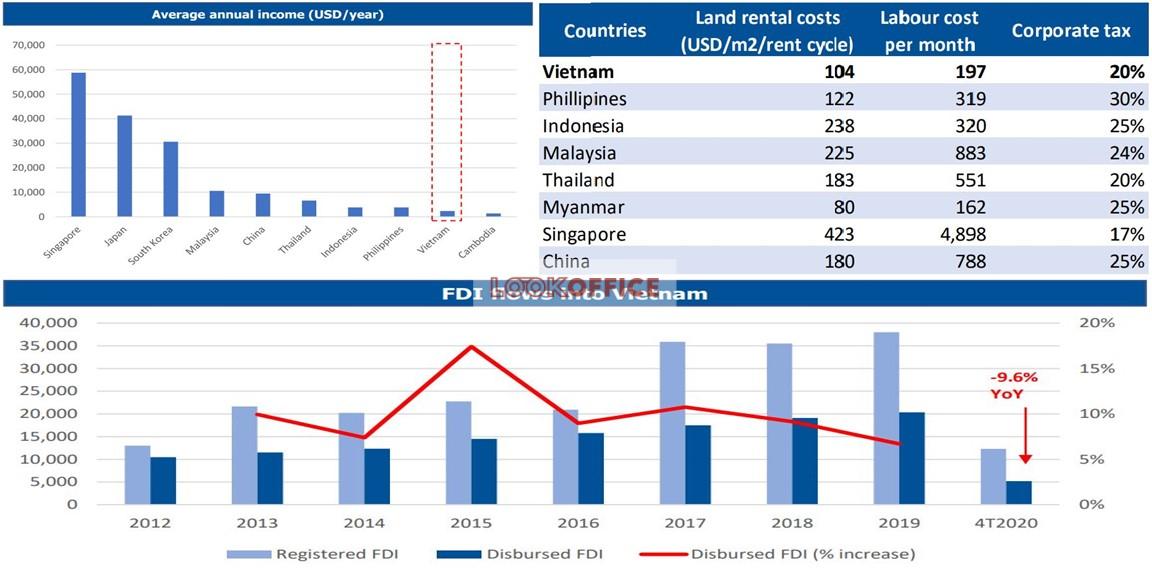
Advantages of Vietnam:

  • Labor costs are relatively low compared to other countries in the region and young labor force (52% of people of working age).
  • Stable economy and high growth.
  • Large market with increasing purchasing power and growing middle class, with a total population of 95 million.
  • Strategic geographic location: Located next to China, Vietnam is close by making it an ideal alternative location for investors seeking to diversify their supply chains from China.
  • Increasing participation in global connections: recent strategic trade agreements: AFTA, EU-Vietnam FTA, CPTPP
  • Supporting the legal framework: the government is improving the investment environment to become more transparent and fair.
  • Vietnam's picture

Impacts from Covid-19 to Vietnam

In the long run, Vietnam could benefit:

  • Vietnam’s international reputation has benefited from the successful handling of Covid-19 and is currently exporting masks and medical equipment to the world, promoting the nation’s brand.
  • In addition, businesses from the US and the world will tend to withdraw from China, for example, Japan recently spent more than US $ 2 billion to support businesses withdrawing from China because of the Covid-19 epidemic. disrupting the supply chain between the two countries.
  • Besides, Vietnam has joined a series of free trade agreements (FTAs), including EVFTA, which have recently been expected in the long term.

However, in the short term and especially in 2020, industrial enterprises will encounter negative factors from:

  • Global economic activities plummeted from Covid-19, causing businesses to face financial difficulties. Businesses planning / preparing for investment will have to halt due to financial impacts, ambiguous macro factors from diseases, and travel experts to check for new restricted projects.
  • Investment capital into Vietnam in the first quarter of 2020 decreased in both quantity and total investment capital, in the first quarter of 2020 only reached 8.55 billion USD, down 20.9% over the same period in 2019. Investment capital disbursement also decreased but still at a good level, reaching 3.85 billion USD, equaling 93.4% over the same period in 2019.
  • Vietnam’s infrastructure construction process has slowed down by 2020 due to social isolation.

Therefore, at least in the first half of 2020, the revenue of industrial zone enterprises will drop sharply.

Opportunities from Government efforts

To deal with Covid-19 and supporting companies, the government could:

  • Regarding monetary policy, the State Bank of Vietnam (the State Bank) has continuously cut interest rates since September 2019, both mobilizing and lending rates of commercial banks. Credit growth is expected to reach about 10% by 2020.
  • The Government also promotes public investment to promote growth, with a total planned investment of 700,000 billion VND in 2020. At the same time, implementing economic support packages is estimated at 600,000 billion VND, equivalent to approximately 10% of GDP.
  • Infrastructure investment will be supported and promoted by the government after a slow 3 years, first of all by removing bottlenecks related to public-private partnerships (PPP), including the legal framework. Comprehensive PPP projects and improve public response to fares and tolls, etc.
  • Maintaining high GDP growth (in a good scenario where GDP growth is 5%), stable economic factors include inflation and exchange rate.

Covid-19’s impacts on Vietnam Real Estate

Property Cycle

1. Industrial Parks:

– On the one hand, the slow growth of the global economy and capital withdrawal due to Covid19 may negatively affect FDI inflows into Vietnam. Potential foreign and domestic manufacturers may face financial difficulties from viruses and may postpone their plans in new projects. The travel restriction due to Covid-19 also affects the progress of new/potential projects.

– On the other hand, the Vietnamese Government has handled Covid-19 quite well, prevented the spread of Virus completely and the lock time is very short compared to other countries. Vietnam will benefit from supply chain movements away from China, recent trade agreements, and strong macroeconomic factors.

2. Residential

Covid-19 slows down both the supply and demand sides of the market, and can also affect the psychology of home buyers. However, the Government can support by increasing spending on infrastructure and loosening policies/regulations to support real estate developers.

3. Retail

Footfalls in shopping centres decreased significantly due to Covid-19 (about 70% YoY in Q1 / 2020 – according to CBRE). Retail sales decline, leading to tenants facing increases and landlords having to lower rental/payment rates.

4. Vacation property, hotel, condotel

Tourism significantly affected by Covid-19, the Vietnam National Administration of Tourism (VNAT) has forecast two scenarios:

(1) The coronavirus to be contained by June 2020 – international tourist arrivals would reduce by 70% ;

(2) The coronavirus to be contained by September 2020 – international tourist arrivals would reduce by 75%

5. Office

Businesses may delay the decision to rent a new office in the first half of 2020, but demand will mostly return. However, remote working habits/cultures may start in certain businesses, so the demand for offices is lower.

Source: MB

For Foreign companies want to invest property or look for an office in Vietnam:

CONTACT US

We offer a free consultation to support you to find an suitable Office For Lease In Ho Chi Minh:

Phone: (+84) 398 716 459 – Available via Whatsapp/ Viber/ Zalo

Email: contact@lookoffice.vn

Facebook: https://www.facebook.com/lookoffice.vn/


published at https://lookoffice.wordpress.com/2020/06/16/vietnam-real-estate-outlook-after-covid-19/
or from LOOKOFFICE
or from LOOKOFFICE1
or from LOOKOFFICE1
or from LOOKOFFICE1
or from LOOKOFFICE1
or from LOOKOFFICE1
or from LOOKOFFICE1
or from LOOKOFFICE1
or from LOOKOFFICE1
or from LOOKOFFICE1
or from LOOKOFFICE1

Saturday, June 6, 2020

Weekly Vietnam Property News (30 May – 6 June, 2020)

Weekly Vietnam Property News (30 May – 6 June, 2020)

Investors return to the resort real estate “race track”

Investors return to the resort real estate "race track"

Given the potential of the resort real estate market, long-term investors continue to pour money into this segment. Looking at new projects, you can see potential investors and have their own directions to follow the market trend to catch up.

  • Three new trends for investors:
    Diversify the market to continue to maintain growth, taking into consideration potential tourist destinations that are not yet developed such as Nam Hoi An, Binh Thuan, Ba Ria-Vung Tau, as well as diversifying types product images and professionalization of operational management.
  • Actively in developing new tourism real estate products. The most prominent is the coastal shophouse / shopvilla in Phu Quoc and Ha Long markets.
  • Type of wellness resort (wellness resort). This is a new type and has a lot of potential for development in Vietnam, as the middle-class population in Vietnam is expected to grow fastest in Southeast Asia in the next five years, and tourists from other North Asian countries are increasingly favoring products with a combination of tourism and health rehabilitation.

Potential of resort real estate in a special economic zone in the future after Covid-19

Potential of resort real estate in a special economic zone in the future after Covid-19

The impact of the Covid-19 epidemic has pushed the resort real estate market to “freeze” in the short term. At the time, the given scenarios were all gray when Covid-19 was spreading at a dizzying rate worldwide. Social isolation policy continues to make the index on the resort real estate market more gloomy.

However, in May, with the end of the social gap period, the resort real estate quickly regained its growth momentum. A series of stimulus policies from the tourism industry has been launched such as cheap travel packages, building safe destinations. A series of positive activities has brought about the excitement of the resort real estate soon.

From the perspective of tourism growth, if the expectations of the growth are forecasted at the end of 2019, experts think that it will be difficult to achieve. However, if you look at the number of more than 18 million domestic tourists in 2019, the belief that the number of domestic tourists will leverage the supply of resort real estate is entirely possible.

The operation of the resort real estate market in Vietnam in the open period after the period of social separation has shown positive signs of the recovery process, along with the possibility of rapid recovery of the tourism industry. , tourism real estate will be a field that can recover quickly. Recent efforts and ways of Vietnam against the epidemic have “scored” greatly in the eyes of the international community. With good epidemic control, Vietnam is expected to become a tourist attraction in the world in the near future.

“Lighting” tourism real estate by “lighthouse” night economy

"Lighting" tourism real estate by "lighthouse" night economy

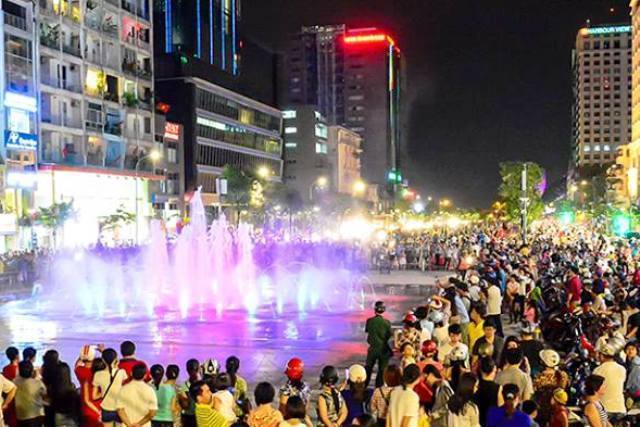
The night economy has brought great economic value to many countries around the world. In Vietnam, the night economy is still open while this industry can help diversify tourism products and increase the value of resort real estate.

Night economics are not unfamiliar in many countries. As a whole, this is an economic – service activity that takes place between the hours of 18:00 and 6am. Due to the characteristics, this activity is often associated with cultural events – art, entertainment services, entertainment, food, shopping … In many countries, the night economy has made a great contribution to promoting socio-economic development, creating jobs, surplus value and attracting foreign currencies.

In Vietnam, the night economy is a new concept. Although the number of international visitors to Vietnam has increased steadily every year, tourism revenue and spending of visitors are still low compared to other countries in the region. According to the Vietnam Tourism Advisory Council (TAB), the average visitor to Vietnam is 96 USD / day, while Thailand is 163 USD / day and Singapore is 325 USD / day. Partly because, the exploitation of night services such as entertainment, entertainment, eating and drinking in the tourist cities of Vietnam is still small, lacking in identity, even though many places consider the night economy to be just a business. food service provider.

Vietnam has many advantages for night-time economic development, such as a young population who prefer to live concentrated in cities, in addition to unique cultural – artistic and culinary factors, degree of integration and globalization. high. It is time for Vietnam to change its perspective and management to promote the advantages of night economic development.

It can be affirmed that if a beautiful land attracts tourists, the night economy is the product that helps retain visitors and maximize profits for the tourism industry. If the night economy is well implemented, it is also potential to increase the value of real estate.

Compiled from many sources by LOOKOFFICE

For Foreign companies want to invest and look for an office in Vietnam:

CONTACT US

We offer a free consultation to support you to find an suitable Office For Lease In Ho Chi Minh:

Phone: (+84) 398 716 459 – Available via Whatsapp/ Viber/ Zalo

Email: contact@lookoffice.vn

Facebook: https://www.facebook.com/lookoffice.vn/

From: https://lookoffice.vn/weekly-vietnam-property-news-30-may-6-june-2020


published at https://lookoffice.wordpress.com/2020/06/06/weekly-vietnam-property-news-30-may-6-june-2020/
or from LOOKOFFICE
or from LOOKOFFICE1
or from LOOKOFFICE1
or from LOOKOFFICE1
or from LOOKOFFICE1
or from LOOKOFFICE1
or from LOOKOFFICE1
or from LOOKOFFICE1
or from LOOKOFFICE1
or from LOOKOFFICE1
or from LOOKOFFICE1

Wednesday, June 3, 2020

HCMC Office Leasing Guide

HCMC Office Leasing Guide

This is the overall characteristics and guidelines about Ho Chi Minh – HCMC Office Leasing for companies that want to start or expand businesses and look for an office in Vietnam.

Of course, there will be a lot of issues that need to be clarified and agreed upon in the search and lease agreement process. In order to get the best agreement as well as save your resources and time, it is better for a professionalism and credibility local agency to represent you to work with the landlords by their relationship, knowledge about the local and office leasing market.

TYPICAL HCMC OFFICE LEASING

 Term  3 – 5 years. Longer for tenants required large space
 Breaks Rarely negotiated
 Renewals  Negotiable
 Rent basis  Rental fee + service charge
 Currency  Must be denominations in VND
 Free-rent  1 week – 1 month for fitting-out
 Escalation  Corrected if the lease is for less than 3 years, but the growing rental includes escalation to address forex concerns
 Security  3 months
 Tenant’s broker  The landlord pays, with the guarantor of the tenant
 Fit-out  Landlord delivers bare shell. Tenant pays fit-out, typically within rent free fit-out period
 Right to sublet  Negotiable
 Transparency  Disclosed with the consent of the parties

LEASE LENGTH OF HCMC OFFICE LEASING

 Term In Vietnam, the lease term usually lasts from three to five years. Anchor or international tenants looking for longer leases can negotiate terms from five to ten years.
 Termination         or Break  Breaking options are rare but can be negotiated.
 Renewal Renewal options are negotiable, usually have caps and
collar in place. A collar is the opposite of a cap, ie, the minimum rental rate.

SPACE MEASUREMENT OF HCMC OFFICE LEASING

 Space Measurement  Space is measured in square meters.
 Definitions Gross Floor Area (GFA): All areas within exterior walls at each floor level, excluding mechanical and electrical service rooms, elevators, and stairs.Net Leasable Area (NLA): space does not include all common areas such as corridors, stairs, lift lobbies, toilets, and electromechanical service rooms, and usually includes columns.
 Efficiency  The percentage of carpet area with NLA is 95%. The ratio of NLA to GFA is usually around 80, 85%, although this may be as low as 60%.

OCCUPANCY COST

 Rent  Rent Quoted Rents are usually quoted in USD per square meter per month.  Currency for PaymentThe tenant pays rent in VND. By law, the landlord must have a VND bank account. If the tenant pays in USD, the bank will convert the payment into VND before crediting to the landlord.When the USD to USD exchange rate decreased in 2009 – 2011, tenants with US $ rent were subject to hidden costs because the US dollar rent required greater payment in the dong when the currency depreciated.New leases are almost entirely signed and signed in bronze, due to increased enforcement of government regulations. With persistent depreciation pressure on the VND, both landlords and tenants try to hedge risks. Leases are made in VND with a fixed annual increase that allows some compensation for the expected devaluation of the currency. Forcing a dong to rent at the rate of USD / VND does not comply with the regulations; therefore, homeowners insert a fixed annual increase in rental rates to compensate for the expected currency devaluation. Rent PayableRent is usually due on a quarterly basis, including service charges, in advance. The tax rate of 10% is not included, but due
at the same time. Rent-Free PeriodsThe free rental term is negotiable. Typically, the rent exemption period is based on a specific case based on the occupancy of the building, the magnitude of the covenant, the lease term and the title rent. The rental exemption period usually includes a suitable time period, although service charges and 10% VAT are still applicable during this period. Under current market conditions, landlords are increasingly competing for incentives including free rent periods. Rent ReviewLeases longer than three years usually stipulate that the parties will renegotiate the rental price after the initial three-year period. The parties manage the risk of long-term lease by agreeing to lease the amendment to a predefined range, usually 10-15% of the base rent.
 Service Charge Service fees include management, 24-hour security for common areas, cleaning, lighting, power supply, plant and machinery maintenance, pest control in common areas, outside window cleaning, clean up trash, lift, and electricity to operate the air conditioning system during normal business hours.The tenant pays a service charge plus 10% VAT in addition to the rent, based on the rented area, on a GFA or NLA basis. The charge varies from building to building, depending on the services provided and the quality of the building. Particular Service fee is:Grade A: USD 5–8 per square meter per month.Grade B: USD 4–6 per square meter per month.Grade C: USD 3–4 per square meter per month
 Taxes  VAT tax 10% is due to both rental and service charges. VAT is paid to the landlord
 Utilities  Electricity: Typically in buildings A and B, electricity (excluding air conditioning) is metered and paid to the owner. Air conditioning during normal business hours is included in the service charge. In some cases, electricity may be included in the service charge.Water: Water charges in public areas are included in the service charge. The tenant pays water in the tenant’s space. Tap water is not potable in Vietnam, so tenants must arrange and pay for drinking water.Telecommunications: The tenant pays the phone and internet service directly to the service provider
 Fit-Out Standard handover is ceiling cover, ie, concrete floor/floor with the finished ceiling. Tenants usually pay for all tenant improvements, such as receptionists, partitions, interior doors, wiring, cables, furniture, floors, and ceiling modifications. Hardware and IT phone systems are the responsibility of the tenant. Appropriate costs range from 150 – 600 USD / m2.
 Restoration  The tenant usually must restore the property to its original condition at the end of the lease term or pay the landlord, unless otherwise agreed.
 Security Deposits and Guarantees  The tenant pays the deposit based on the leased area, on a GFA or NLA basis. A three-month security deposit is usually paid when signing the lease. At the end of the lease, the landlord will return the deposit in the same currency as received, excluding interest. If the parties renew the lease for a different term, the security deposit is usually adjusted at the new market rate.
 Car Parking  Renters often pay extra for parking. In Ho Chi Minh City, this tax is approximately $100 – $200 + 10% VAT per car parking lot per month for Grade A buildings. In Ho Chi Minh City, motorbike parking is usually $10 – $20 + 10% VAT per bike every month. Depending on market conditions, landlords are increasingly competing for incentives including parking.
 Other Occupancy Costs Air conditioning after working hours, internal hygiene and insurance

TRANSACTION COSTS

 Agency Fees  Landlords pay this fee, tenants do not have to spend any cost for an agency to find an office for them.
 Legal Fees  Both parties share legal fees.
 Other Transaction Costs  Both parties share other costs incurred (if any) related to the preparation and implementation of the lease contract.

OTHER LEASE PROVISIONS OF HCMC OFFICE LEASING

 Standard Lease Landlord or agent provides the draft lease agreement, usually with standard terms and conditions
 Right to Sublet The sublease is carried out on a case-by-case basis, but requires the owner’s consent if the business license does not grant the sublease right.
Option to Expand & Right of FirstRefusal  Options to expand are negotiable. Tenants may negotiate in their lease agreement the first right of refusal to contact space on the same or floors adjacent to the same terms and conditions contained in a party offer. Tuesday, with 15 days to match any third party Party offers. Usually negotiated on a case by case basis
Signage and Naming of Building:  Depending on the market and building conditions, each building has a place to place the company’s name in the building (standard size). If a tenant wants to place a large-size sign outside the building to promote the company’s image, the tenant will have to pay an extra fee to place the billboard.

If you want to inquire about an office location or start operating or expand your business in Vietnam, contact us today. We offer a free consultation to understand your requirements and put you on the right track.

CONTACT US

We offer a free consultation to support you to find a suitable Office For Lease In Ho Chi Minh:

Phone: (+84) 398 716 459 – Available via Whatsapp/ Viber/ Zalo

Email: contact@lookoffice.vn

Facebook: https://www.facebook.com/lookoffice.vn/


published at https://lookoffice.wordpress.com/2020/06/03/hcmc-office-leasing-guide/
or from LOOKOFFICE
or from LOOKOFFICE1
or from LOOKOFFICE1
or from LOOKOFFICE1
or from LOOKOFFICE1
or from LOOKOFFICE1
or from LOOKOFFICE1
or from LOOKOFFICE1
or from LOOKOFFICE1
or from LOOKOFFICE1
or from LOOKOFFICE1